
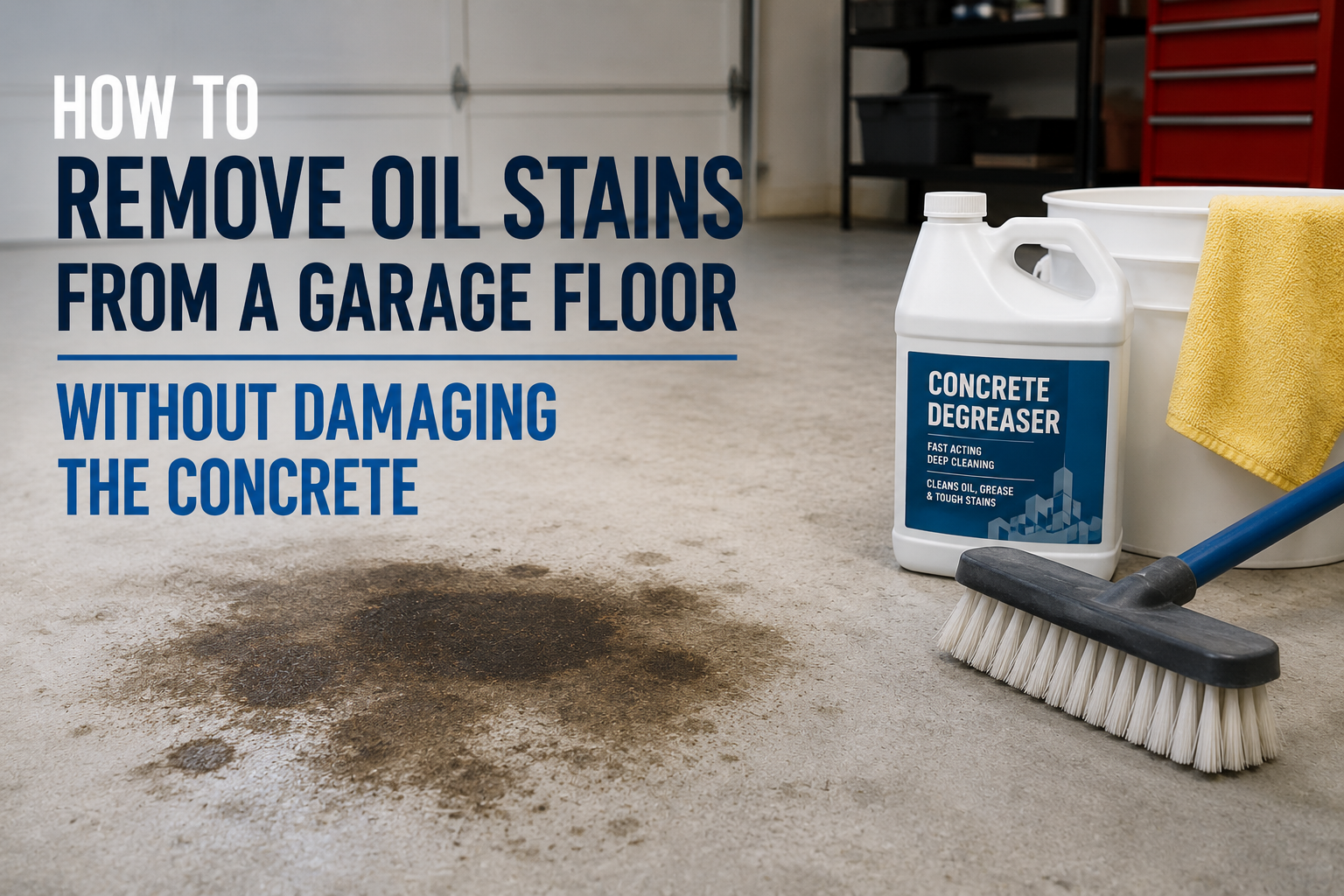
Short answer: a poultice or a concrete-safe degreaser lifts most oil stains without harming the slab, while muriatic acid and wire brushing can permanently mark or weaken it. The method that works fastest is rarely the one that’s safest for the concrete, so it’s worth knowing which option fits the stain in front of you before reaching for whatever’s under the sink.
Concrete is porous, so oil doesn’t sit on top of it the way it would on a sealed tile. It soaks into the surface, which is why old stains feel baked in and why some removal methods that work on tile or laminate do nothing here, or actively make things worse. If you’re dealing with stubborn oil stains and need Garage Floor Cleaning Melbourne services, using the right cleaning method can help restore the appearance of your concrete without causing damage.
Comparing Your Options
| Method | Best For | Risk to Concrete | Effort |
|---|---|---|---|
| Absorbent poultice (cat litter, baking soda, cornstarch) | Fresh spills, same-day clean-up | Very low | Low |
| Concrete-safe degreaser | Set-in stains, moderate age | Low, if left to dwell per label | Medium |
| Enzymatic / bio-cleaner | Organic oil residue, odour control | Very low | Medium (slower acting) |
| Pressure washing | Rinsing after a degreaser, general grime | Moderate, if held too close or too high a setting | Medium |
| Muriatic or strong acid | Not recommended for routine use | High, dissolves cement binder, causes efflorescence | Low effort, high risk |
Not every oil stain calls for the same fix. A stain from this morning needs a different approach to one that’s been there for three winters. Here’s how the common methods stack up.
Step-by-Step: The Poultice Method
This is the safest starting point for most stains, fresh or several days old, and it’s the method least likely to leave a mark on the slab.
- Cover the stain generously with an absorbent material — cat litter, sawdust, or baking soda all work.
- Press it lightly into the stain with a piece of cardboard so it makes full contact with the oil.
- Leave it for at least several hours, overnight for older stains, so it has time to draw the oil out of the pores.
- Sweep away the residue and check the result. Repeat if any darkness remains.
- If a shadow is still visible, follow up with a concrete-safe degreaser rather than jumping straight to acid.
Get the Stain Out Without Gambling on the Concrete
If the poultice method hasn’t fully cleared an old stain, or the floor already shows signs of previous damage, OZ Tile Cleaning offers expert Garage Floor Cleaning Melbourne services. Their experienced technicians can assess the slab and use a cleaning method tailored to its condition, helping remove stubborn oil stains while protecting the integrity of your concrete floor.
Frequently Asked Questions
Will vinegar damage my garage floor?
Vinegar is a mild acid, and while it’s gentler than muriatic acid, repeated use can still etch the surface of unsealed concrete over time. It’s better reserved for light, occasional spots than for regular oil stain removal.
Does WD-40 remove oil stains from concrete?
WD-40 is a solvent-based product designed to loosen grease and rust, and some people use it to help lift old oil marks. It doesn’t damage concrete the way acid does, but it needs to be followed up with a degreaser and thorough rinsing, or it leaves its own residue behind.
Why does the stain come back after I clean it?
If oil has soaked deep into the concrete, lifting the surface layer doesn’t remove what’s still lower down. It can slowly migrate back up over the following days or weeks. This is more common with old, deep stains and is one reason a poultice left overnight tends to outperform a quick scrub.
Is pressure washing safe on its own?
It’s a useful rinsing step after a degreaser or poultice, but on its own it mostly moves surface dirt around rather than lifting oil out of the pores. Held too close, it can also etch the surface, so it works best as a follow-up step rather than the whole solution.
When the Stain Needs a Professional
Large stained areas, oil that’s been sitting for months or years, or concrete that’s already been marked by a previous acid treatment are harder to resolve with household products. A professional clean can match the degreaser and pressure to the condition of the slab rather than guessing, which matters most on a floor that’s already been damaged once.