
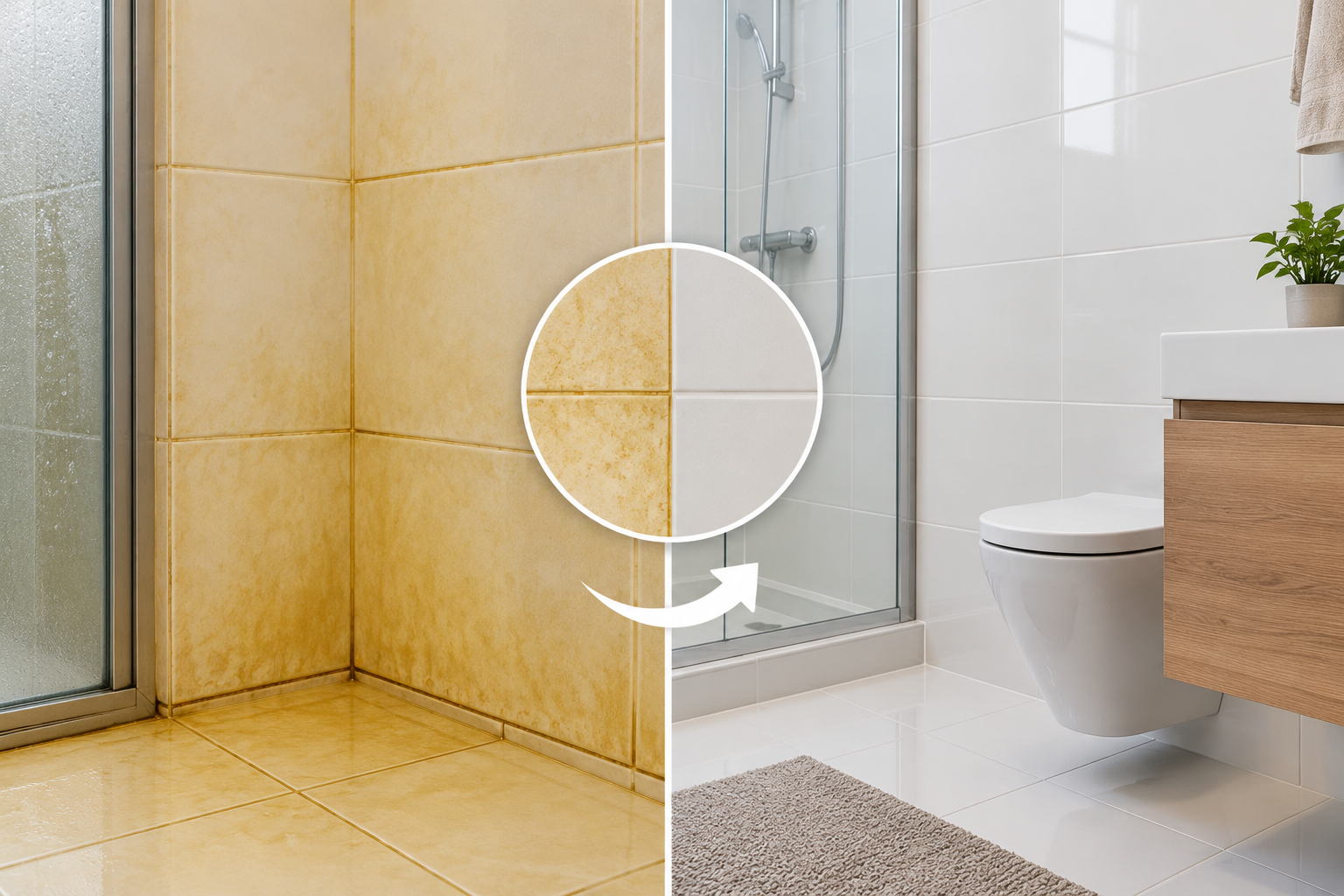
Yellow bathroom tiles can be frustrating, especially when you clean them regularly and the dull colour keeps coming back. You scrub the shower, wipe around the vanity, and expect everything to look fresh again. Yet those yellow marks seem determined to stay. The good news is that dirty tiles are not always the real problem.
Soap residue, hard-water deposits, moisture, stained grout, as well as inappropriate cleaning agents, can affect the appearance of your tiles.
Understanding the exact cause helps to choose an appropriate cleaning method.
Soap and Bathroom Products Leave Yellow Residue
The most frequent reason for such a change is soap scum. Body wash, shampoos, conditioners, and bath oils can leave a thin layer when applied. Then this layer starts absorbing moisture and dust and additional soap residue.
These changes usually become apparent near shower walls, bathtubs, and the vanity area. Even though the surface of the tiles still feels smooth, the accumulated film requires special cleaning.
Hard Water Changes Colour Over Time
Another thing to consider is hard water. While evaporation leaves mineral deposits, they are usually visible as white or chalky spots. With further exposure to soap scum, dirt, and humidity, yellow or brown stains start appearing.
It is necessary to pay attention to places like taps, drains, and shower screens. These mineral deposits can accumulate and become difficult to remove.
Trapped Moisture Makes Stains Look More Visible
If your bathroom is filled with steam after a shower but no airflow exists, the environment remains moist long enough for soap, mildew, and other stains to develop.
In the case of grout, the process is even faster due to its porous structure. Thus, if your grout is already damp or dirty, it makes your tiles look yellow.
Yellow Appearance Is Sometimes Caused by the Grout or Inappropriate Cleaning Products
Sometimes the yellowness is caused not by tiles, but by the grout. The grout lines tend to absorb the soap, moisture, dust, and other contaminants, while the stains settled under the surface may not be wiped off by the usual cleaning techniques.
In addition, sometimes the products used for cleaning may lead to discolouration. Excessive residues left after cleaning can leave yellow stains when not rinsed properly. Aggressive cleaning products can also cause dullness and damage. Always use an appropriate cleaning agent for your tile type and never combine different chemical cleaners.
Simple Habits Prevent Discolouration
Preventive measures should not require additional effort on weekends. Certain small routines will help reduce the frequency of stains returning.
For example, after using various cleaning products on tiles, rinse the surface thoroughly and remove excess moisture. Maintain good ventilation in your bathroom until all steam disappears. Clean any spillages right away and rinse the cleaning products properly. To keep the grout in good condition, you can use a soft brush or cloth for regular maintenance.
Yellowing may be natural for older tiles that have lost their brightness. Old grout also tends to become more absorbent and thus allows staining to settle in.
Recognise When Your Bathroom Requires Professional Cleanings
Professional cleaning is recommended when discoloured tiles cover a large area or stained grout persists after thorough cleaning. This technique is also required when hard water and residue deposits are formed.
Fortunately, yellow tiles do not always require a replacement. OZ Tile Cleaning offers professional tile and grout cleaning in Melbourne and can perform assessment of the situation to suggest the right cleaning technique. If needed, grout sealing can also provide additional protection against stains and moisture.