
Keeping a bathroom clean takes time and effort. Yet nothing feels more frustrating than seeing black grout return just days after a thorough scrub. It can leave you wondering whether you are doing something wrong or using the wrong cleaning products.
Recurring dark grout is not always caused by poor cleaning habits. Moisture, hidden residue, and everyday bathroom conditions often play a much bigger role than people realise.
Once you understand what is happening beneath the surface, it becomes much easier to stop the problem from coming back and keep your shower looking fresher for longer.
Moisture Can Do That
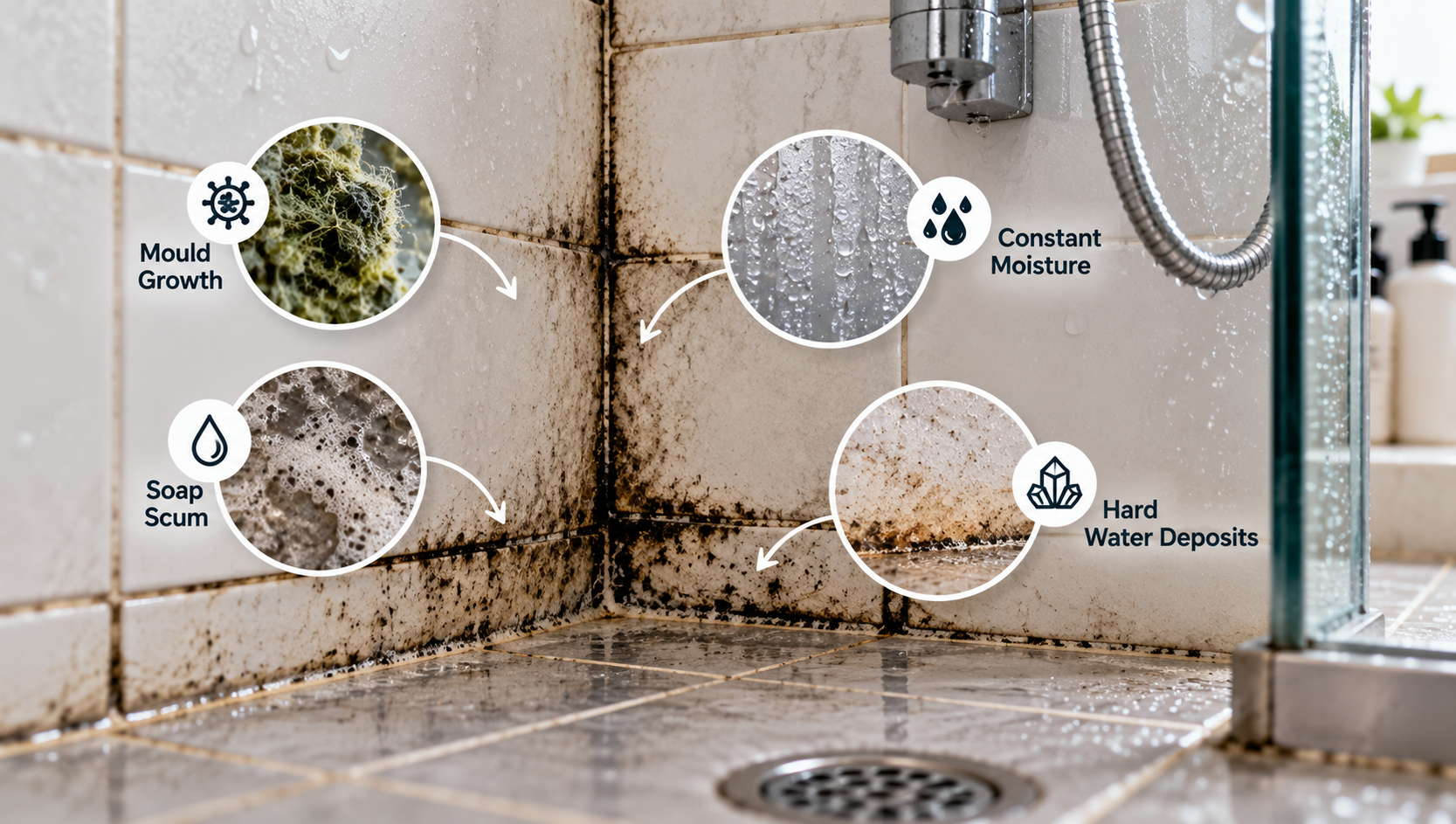
Anytime you use your shower, you are creating moisture in the bathroom, unless your house is equipped with a ventilation system to remove the moisture, which leaves moisture in the air after the shower.
Therefore, poor ventilation can contribute to mould and mildew buildup, making it likely to see some form of mould or mildew growing on shower grout. You can prevent mould and mildew on your shower grout by utilising your ventilation system (if you have one).
Other than poor ventilation in the bathroom, the fact that shower grout gets dirty a lot quicker than other tiles in the area can also lead to dark, dirty black grout.
Grout Gets Dirty Beyond What You Can See
In addition to the fact that grout is generally a darker colour than the tile surrounding it on your walls and floors, the substance itself is quite porous and will absorb moisture more easily than the glazed tiles surrounding it.
The absorption in shower grout can result in soap and dirt particles becoming embedded deeper into the crevices of the shower, leaving some unnoticeable dark spots.
In addition, moisture buildup leads to mould and mildew buildup in your grout.
After a cleaning session, you may only be addressing the soap scum and mould spots you can see on the bathroom tile. Without properly addressing all of the mildew that has built up over time, the next time you clean your shower, you will be viewing those very same soap scum and mildew spots, just maybe darkened or even larger.
What You Might Be Doing Wrong?
Although your normal bathroom cleaners may work well enough to get out surface grime on the tile in the shower, most bathroom cleaners available over the counter are not effective against embedded stains on tile surfaces.
Furthermore, you may find that harsh chemicals or the wrong type of cleaner can end up harming your grout or tile, causing more problems than you would like.
The key is to ensure you are cleaning properly while also protecting your investment in your home.
Cracks in the grout allow water to accumulate on the tile substrate, creating additional dark spots on the tile and grout. Once water is getting into the cracks, it is sometimes difficult to dry out the accumulation pockets in the crack, and the water may even lead to mildew growth within the crack itself.
Cracked grout can be repaired or replaced right away to stop any moisture from getting in or causing further damage. The earlier you deal with cracked shower grout, the less expensive it will be to fix.
Conclusion
Black shower grout does not automatically mean your bathroom is dirty. In many cases, moisture, poor ventilation, porous grout, hidden residue, or damaged grout are the real causes. Understanding these issues helps you treat the source of the problem instead of cleaning the same stains again and again.
If stubborn grout stains continue to return, Oz Tile Cleaning offers professional tile and grout cleaning services that help restore the appearance of tiled surfaces.