
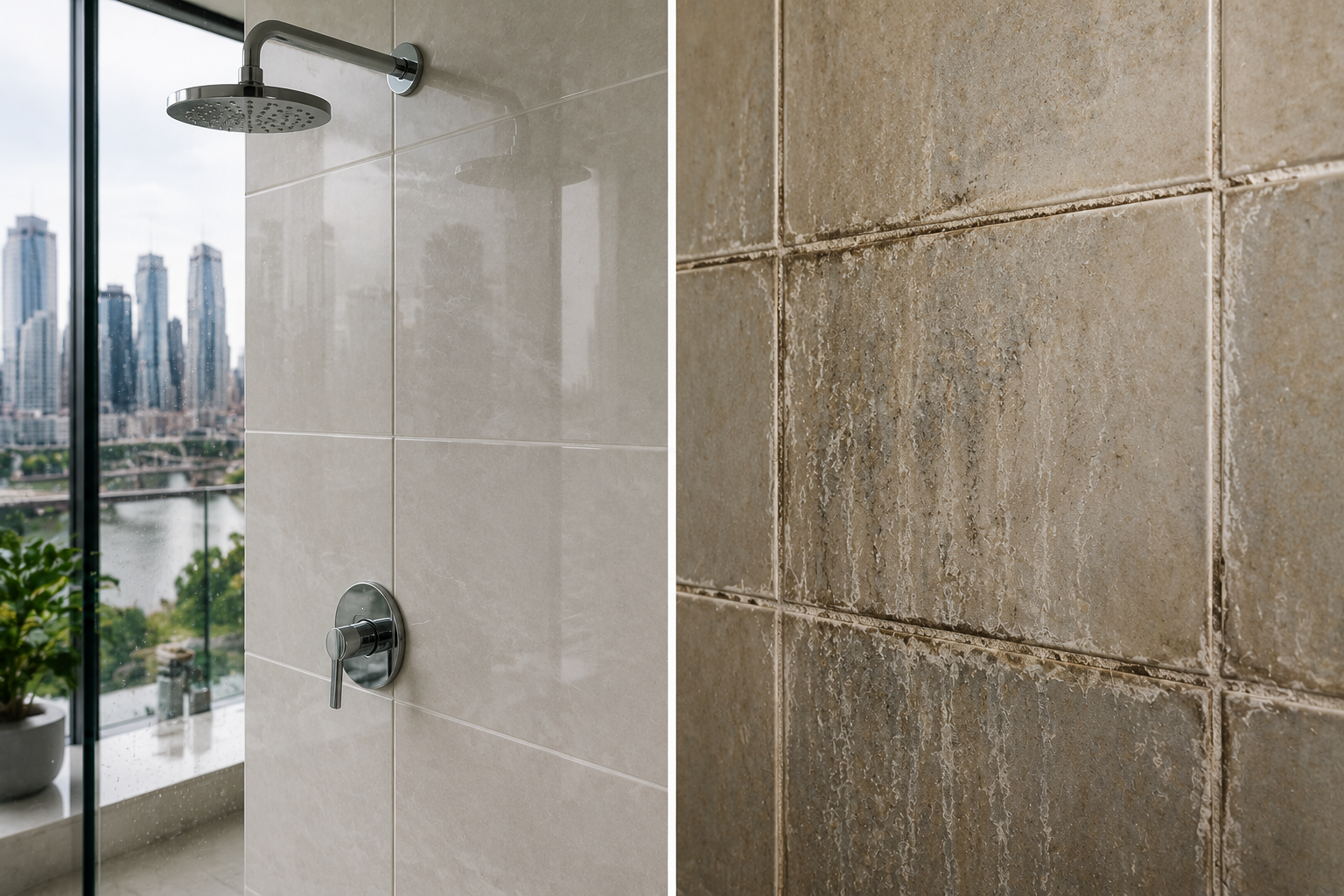
Tiles add an elegant appearance to any residential or commercial property. However, any tiled area loses its shine over time due to an issue that very few property owners pay attention to, such as hard water. Although the water in Melbourne is softer than in most other regions of Australia, deposits of minerals occur over time.
Bathrooms, kitchens, laundries, balconies, and other damp areas are especially prone to this phenomenon. The effect may not be significant at first. Yet eventually, hard water gets into grout, giving tiles a discoloured and stained look that cannot be easily cleaned.
Why Grout Is Prone to Build-ups?
Most tiles have glazed or sealed surfaces which protect them from moisture. However, grout is porous and allows water, minerals, soap residues, oils, and other particles to accumulate easily.
The process starts with water drying and leaving mineral deposits behind. Gradually, the accumulated deposits get increasingly harder to remove. As a result, grout turns yellow, grey, brown, or uneven despite relatively clean-looking tiles.
What Are the Signs of Accumulated Mineral Deposits?
Hard water creates certain visible signs. They become clearer and more obvious with each passing day. Some of the warning signs include white or chalky deposits, dark spots, rough texture, discoloured tiles, and spots which keep coming back after you clean the surfaces.
Have you noticed that your shower stall looks dirty after thorough cleaning? This happens because hard water mixes with soap residue and settles inside the grout. As a result, it stays beneath the grout surface rather than on top, thus making the cleaning efforts ineffective.
How Does Hard Water Increase the Risk of Soap Scum and Mould?
While hard water does not usually create any problems, in combination with soap, shampoo, body oils, and cleaning agents, it forms soap scum which sticks to both tiles and grout.
Moreover, hard water creates conditions that encourage the growth of mould because damp grout gets scratched with the minerals which settle there. Hence, appearance and hygiene of tiled surfaces can degrade over time.
Why DIY Methods Do Not Work?
Numerous property owners rely on vinegar, bleach, store-bought cleaners, abrasive pads, or stiff grout brushes to tackle hard water issues. Even though such treatments do work, they do not succeed in removing mineral deposits from porous grout.
Certain types of cleaning chemicals may even damage your tiles or make your grout weak. Professional cleaning includes special equipment and proper cleaning solutions that can remove embedded minerals, soap scum, mould, and dirt.
How to Protect Grout for Longer?
Professional cleaning removes accumulated mineral deposits, but protection is just as important. Application of grout sealant prevents water, oils, dirt, and minerals from penetrating the surface.
Additionally, you should use some tips which will prevent mineral accumulation and reduce future maintenance costs. For example, drying shower floors, increasing ventilation, wiping splash zones, and using pH-neutral cleaners will help you in this respect.
Keep Your Tiled Areas in Perfect Condition
People in Melbourne use tiled surfaces because they are durable, practical, and aesthetically pleasing. Grout requires proper care to maintain its appearance because hard water, daily moisture, soap residues, and foot traffic cause staining and deteriorate grout condition over time.
For reliable grout and tile cleaning, we recommend you to contact OZ Tile Cleaning. Our services are based on our experience, honesty, and commitment to customers’ needs. Let OZ Tile Cleaning offer you a variety of professional cleaning solutions.